















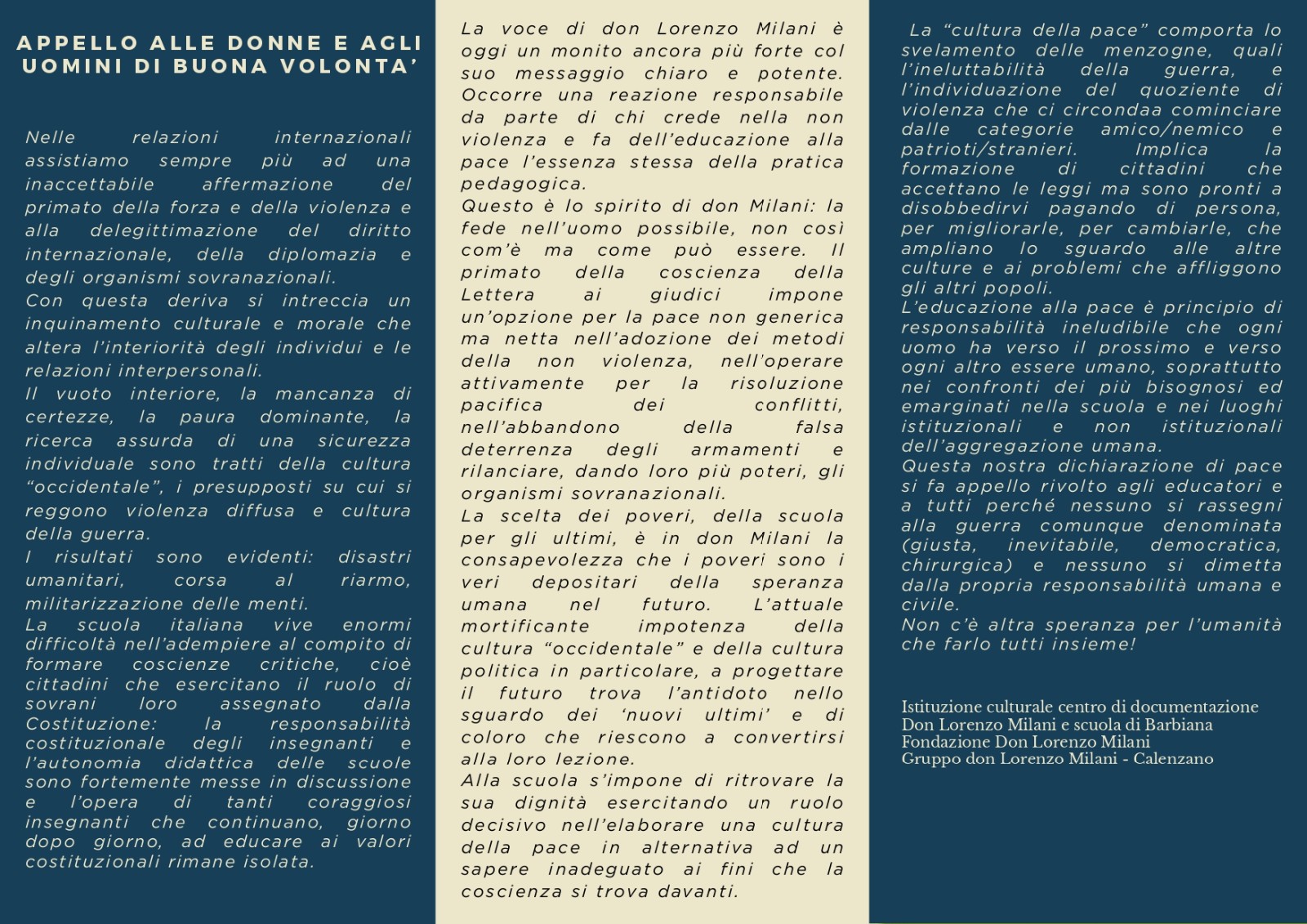
In international relations, we are increasingly witnessing an unacceptable assertion of the primacy of force and violence, as well as the undermining of international law, diplomacy, and supranational bodies. Intertwined with this drift is a cultural and moral pollution that alters the inner lives of individuals and interpersonal relationships. Inner emptiness, a lack of certainties, pervasive fear, and the absurd pursuit of individual security are traits of “Western” culture—the very foundations upon which widespread violence and the culture of war are built.
The results are evident: humanitarian disasters, an arms race, and the militarization of minds. The Italian school system faces enormous difficulties in fulfilling its task of forming critical consciences—that is, citizens who exercise the sovereign role assigned to them by the Constitution: the constitutional responsibility of teachers and the educational autonomy of schools are strongly called into question, and the work of so many courageous teachers who continue, day after day, to educate students in constitutional values remains isolated.
Don Lorenzo Milani’s voice serves as an even stronger warning today, with its clear and powerful message. A responsible response is required from those who believe in non-violence and make education for peace the very essence of their teaching practice. This is the spirit of Don Milani: faith in the potential of humanity, not as it is but as it could be. The primacy of conscience in the Letter to the Judges demands a choice for peace that is not generic but clear-cut: in the adoption of non-violent methods, in actively working for the peaceful resolution of conflicts, in abandoning the false deterrence of armaments, and in revitalising supranational bodies by granting them greater powers.
The choice of the poor, of a school for the least, is, in Don Milani, the realisation that the poor are the true custodians of human hope for the future. The current humiliating impotence of ‘Western’ culture, and of political culture in particular, to plan for the future finds its antidote in the gaze of the ‘new least’ and of those who manage to convert to their lesson. Schools must rediscover their dignity by playing a decisive role in developing a culture of peace as an alternative to a form of knowledge inadequate for the purposes that conscience now faces.
The ‘culture of peace’ involves exposing falsehoods, such as the inevitability of war, and identifying the level of violence that surrounds us, starting with the categories of friend/foe and patriots/foreigners. It involves the formation of citizens who accept the laws but are ready to disobey them, paying the price personally, in order to improve them, to change them, and who broaden their horizons to other cultures and the problems afflicting other peoples. Peace education is an inescapable principle of responsibility that every person has towards their neighbour and towards every other human being, especially towards the most needy and marginalised in schools and in both institutional and non-institutional settings of human gathering.
This declaration of peace of ours is an appeal to educators and to everyone, so that no one resigns themselves to war, however it may be described (just, inevitable, democratic, surgical), and so that no one abdicates their human and civic responsibility.
There is no other hope for humanity than for us all to do this together!
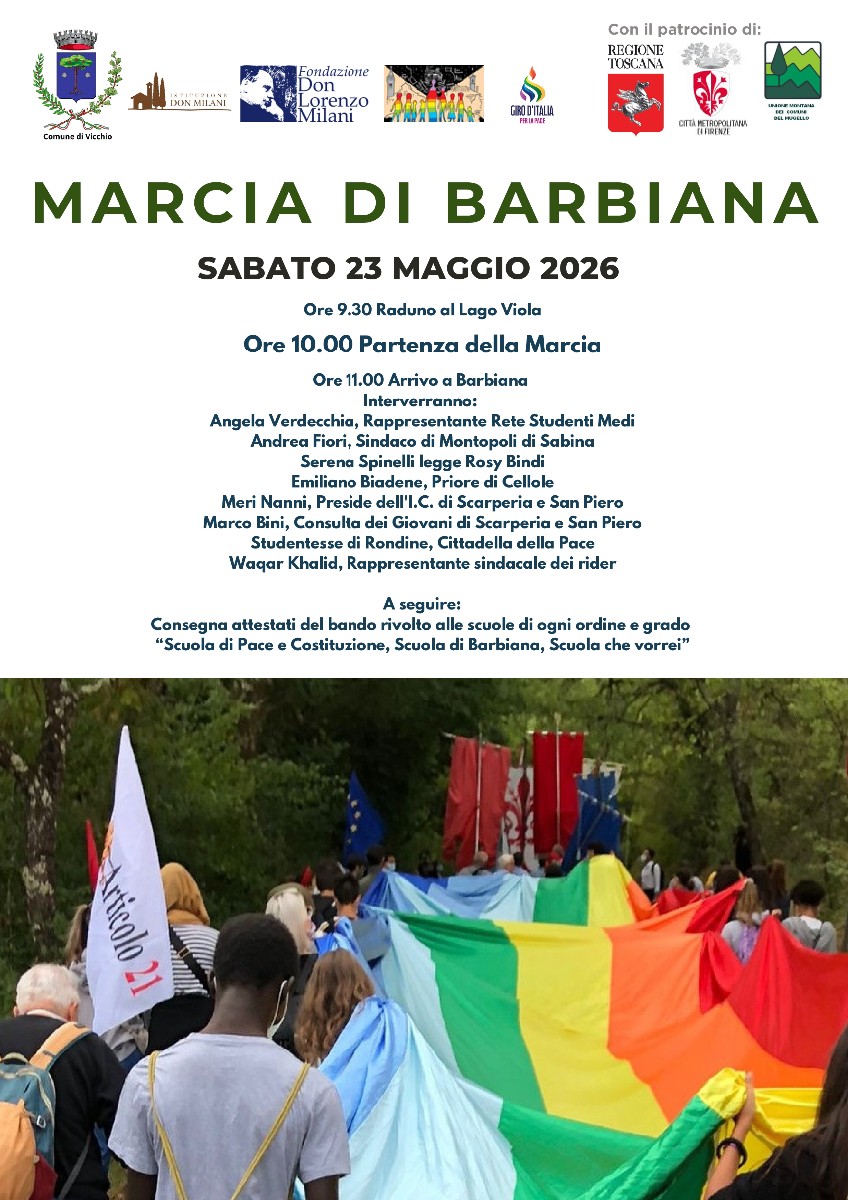
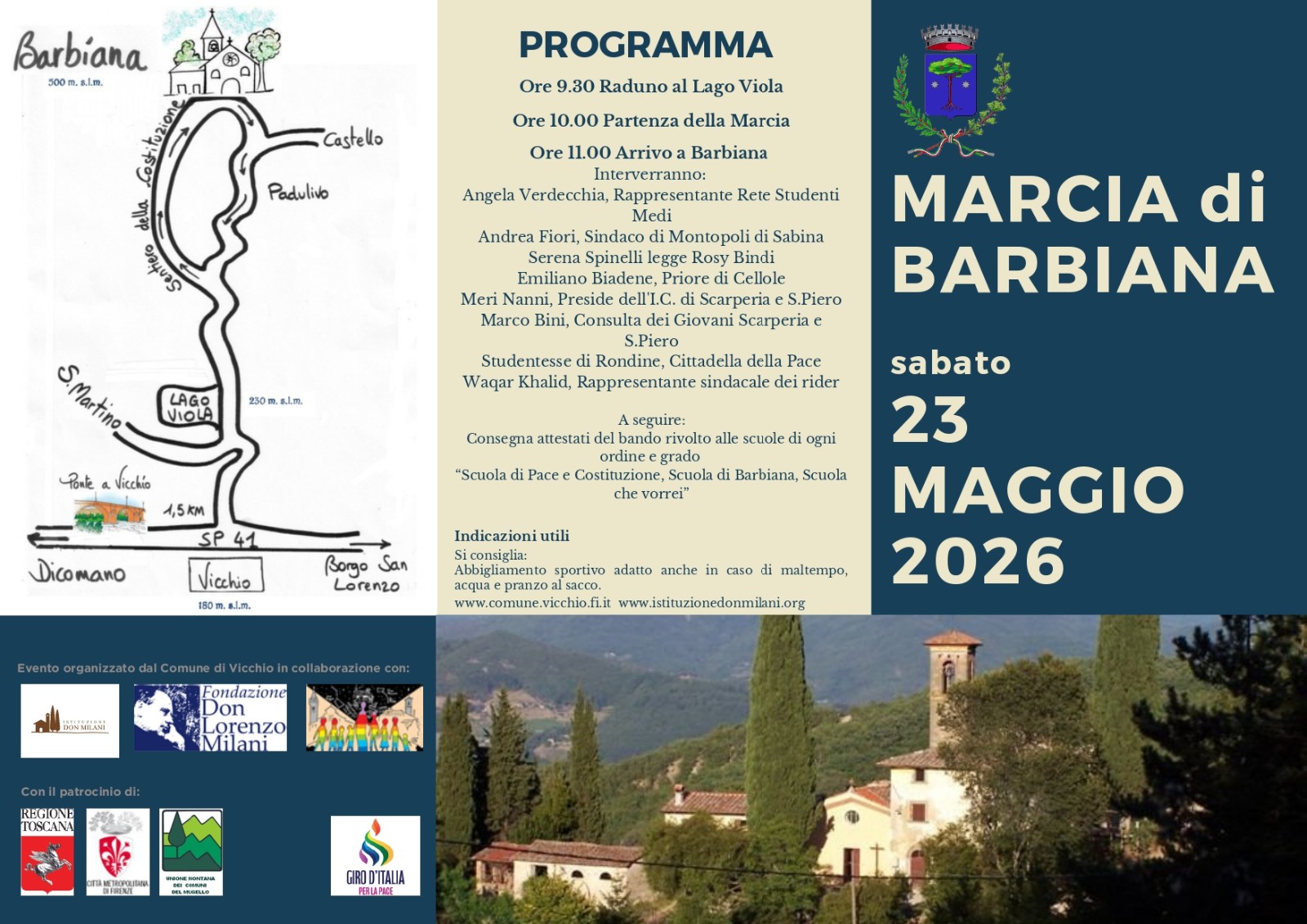
With this commitment in mind, on Saturday 23 May 2026, we ask you to take part in the Barbiana March, setting off at 10:00 am from Lago Viola (Vicchio), where for 25 years those who believe that peace comes first have been gathering as sisters and brothers.
Info: 055 8439269 / www.istituzionedonmilani.org


