











 In the woods of MoschetaThe Tuscan Region Forests cover a distance of 110,000 hectares and make up almost 20% of all Italian state forests.
In many of these forests we can often experience ancient history, for example the monasteries of Vallombrosa, Camaldoli, La Verna and Moscheta nel Mugello. Here spiritual values were intertwined with the administration of the territory itself. One thing these forests have in common is the political rule of, and, therefore, the administration of the land by, the Medici family first and the grand-ducal government later. The relationship with the latter was, in fact, rather controversial because if on the one hand the forest was greatly exploited to fuel furnaces for making iron, on the other hand steps were taken to protect and improve the natural wealth of the land.
Between the end of the 19th century and the beginning of the 20th, in an area called Alpe di Grezzano, Edmondo Dapples, a Swiss doctor, started an extensive reforestation and redevelopment programme. In 1930 Dapples is said to have had 1,600,000 saplings planted.
The Region assigned the administration of this natural wealth to local governments: Unione Montana and, where this did not yet exist, to the municipalities.
In Mugello the Unione Montana runs 4 woodland areas: Giogo-Casaglia, Calvana, Alto Senio, and Alpe 1.
The flora
The area, along the summit, contains mostly beech trees, while on the lower areas we find mixed or pure woods of hornbeam, Turkey oak and pubescent oak. In areas that are more suitable we also find chestnut woods. Numerous other plant species can be found, for example: willow, wild cherry, mountain oak and mountain ash.
Conifers grow more sporadically, probably due to the reforestation on abandoned farm lands. The most common species include black pine, Douglas fir, silver fir and Norway spruce. The remaining area is covered in underbrush, abandoned fields, farm lands and meadows where animals graze. Among the many different shrubs we find, for example: hawthorn, cornel, juniper, broom, raspberry, dog-rose and elder.
Numerous grasses and herbs also grow on the land: windflower, buttercup, lesser celandine, cyclamen, martagon lily, hellebore, many species from the orchid family, bird’s nest orchid, wild thyme and many others.
The fauna
The territory’s wildlife, thanks to a set of laws instituted to safeguard state woodlands, is particularly extensive both in terms of quantity and quality.
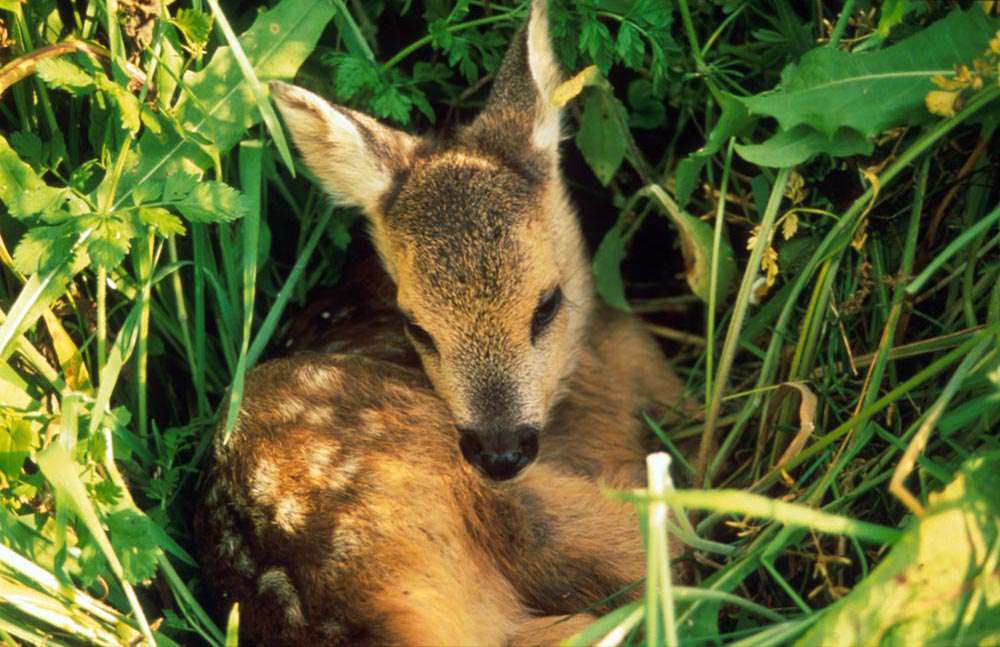
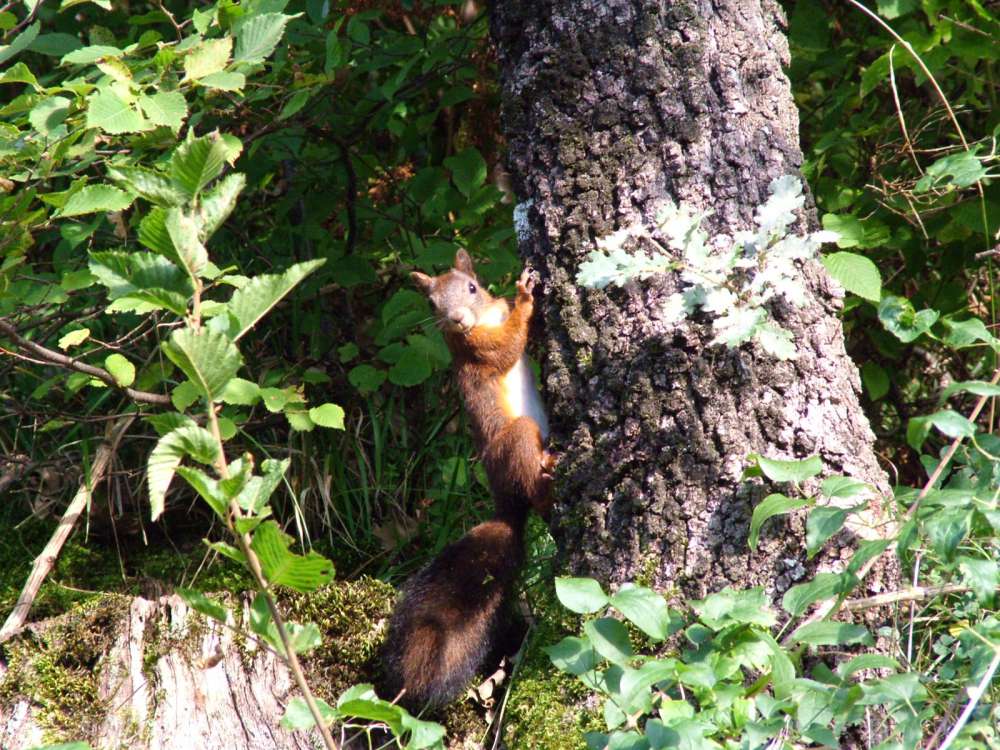
The land has a great number of fallow and roe deer. There are also a considerable number of wild boars, hares, foxes, skunks, stone-martens, badgers, squirrels, dormice, hazel mice and hedgehogs. An exceptional presence is certainly that of the porcupine.
The wolf is also definitely part of the territory’s fauna since 1988.
The asp (Vipera aspis) can be found almost anywhere on the territory but very rarely has man reported to have been bitten (the viper is, in fact, notably lazy and reserved, and bites only when trying to procure food or in self-defence).
Among the bird species we can easily find: the green woodpecker, the great spotted woodpecker, the mistletoe thrush, the fieldfare, the redwing, the song thrush, the blackbird, the stonechat, the robin, the blackcap, the greater whitethroat, the leaf warbler, the jackdaw, the crow, the jay, the magpie, the chaffinch, the bramble finch, the hawfinch, the green finch and the corn bunting. At nesting time, in summer, it is easy to observe the golden oriole and the turtle-dove, and in autumn the woodcock.
Numerous birds of prey are also present, both diurnal like the buzzard and the kestrel, and nocturnal like the long-eared owl, the eagle-owl, the scops owl and the little owl.
Physical features
 The characteristics of the watershed that extends from the Giogo Pass (882 m) to the Colla di Casaglia (913) are somewhat irregular.
There are sharp differences in altitude, which become more uniform on the eastern edge, along the Giogona (1011 m.).
The highest peaks are found on the northern extremity: Monte Carzolano is, in fact,1187 metres high, and Monte La Faggeta 1144 m.
Between the two heights, on the Adriatic side, we find the highest points of the Rovigo and Lamone valleys, which are deeply carved and outline smaller valleys.
The Mugello side of the mountain to the south is shorter and steeper.
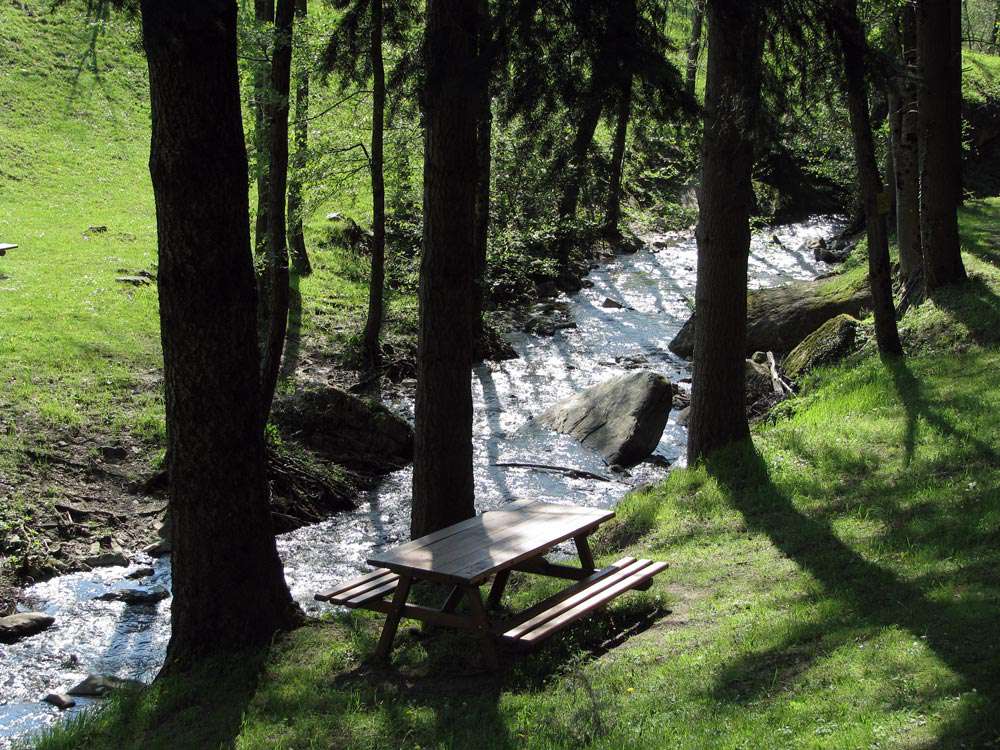
The overall condition of the footpaths, bridle paths and bike paths is first-rate, and we highly recommend the rest areas and shelters, which were recently restored by the Unione Montana with the cooperation of other associations.


