












Mugello in cucina
"Mugello, tradizione e qualità in cucina" project
The seasons in cuisine

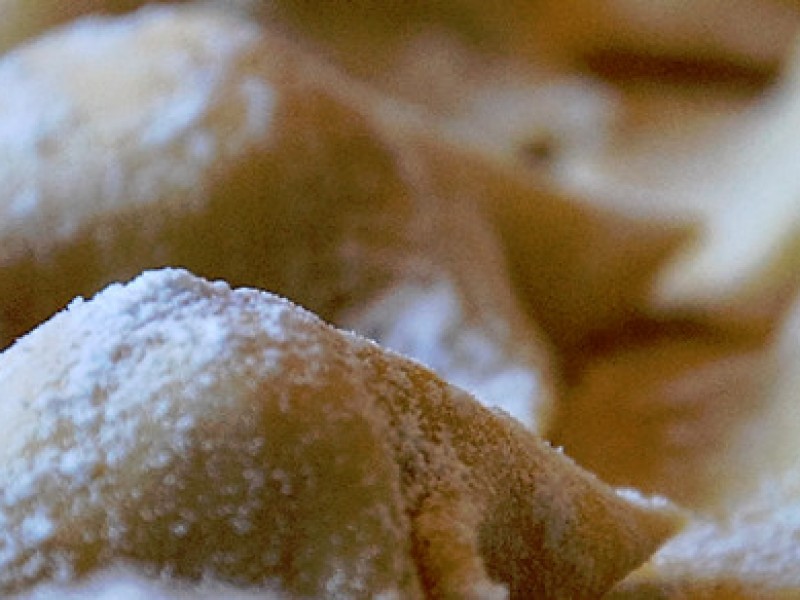
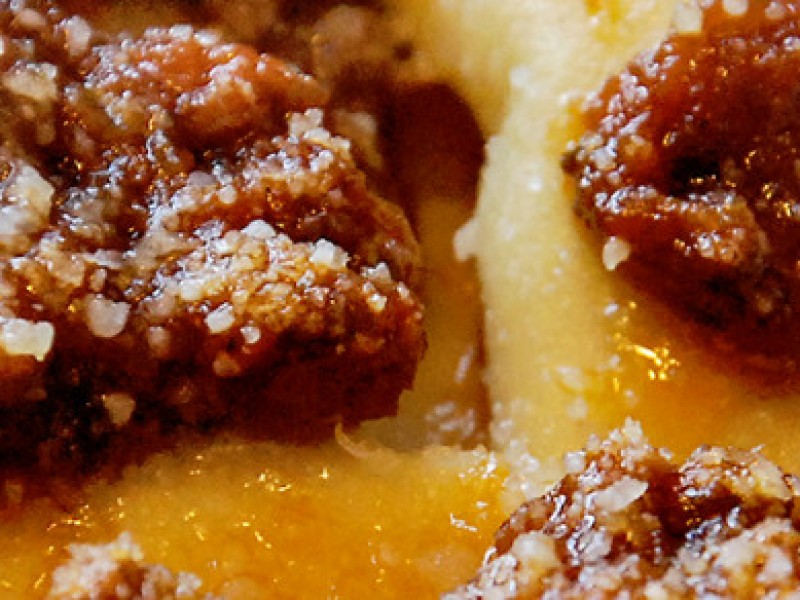
Gastronomic traditions are as important as ever in the Mugello and are associated with the seasons and festivities; at Carnival time cenci (deep-fried pastry strips, sprinkled with icing-sugar) and Migliaccio (millet cakes) are to be found all over the territory, while in the period of Candelora panini di ramerino (sweet rolls flavoured with rosemary) are eaten.
In the town of Borgo San Lorenzo polenta in piazza (cornmeal served to the population in the main square) marks the beginning of Lent on Ash Wednesday. In this season Farinata con gli zoccoli is also eaten, both at home and in local restaurants. This recipe has been proposed both by the Tre Fiumi restaurant in Ronta(near Borgo San Lorenzo) which was founded as an inn by the Parish priest of the church of San Giovanni Maggiore, Domenico Pananti in 1664, and by the “Teatro dei Medici” restaurant (La Torre – Scarperia).
These both use corn flour stone ground at the old water mill Margheri found at the Madonna dei Tre Fiumi.
In Spring, now that the hens are laying, the feast of St Joseph(19th March) is celebrated with sugar-covered rice fritters and at Easter and for the Feast of the Ascension, lamb with fried artichokes and ravioli stuffed with fresh sheep's cheese, flavoured with fresh wild herbs(thyme, clover and nipitella) are served.
Ravioli di ricotta (stuffed pockets of pasta) now considered a national dish, are to be found in most places; originally ravioli were also known as cappellone (hats) and were often stuffed with nettles or sometimes parsley, instead of spinach.
The following recipe is served at the restaurant Locanda della Colla, to be found on the mountain pass of that name through which one goes from the Mugello to Faenza and Bologna.
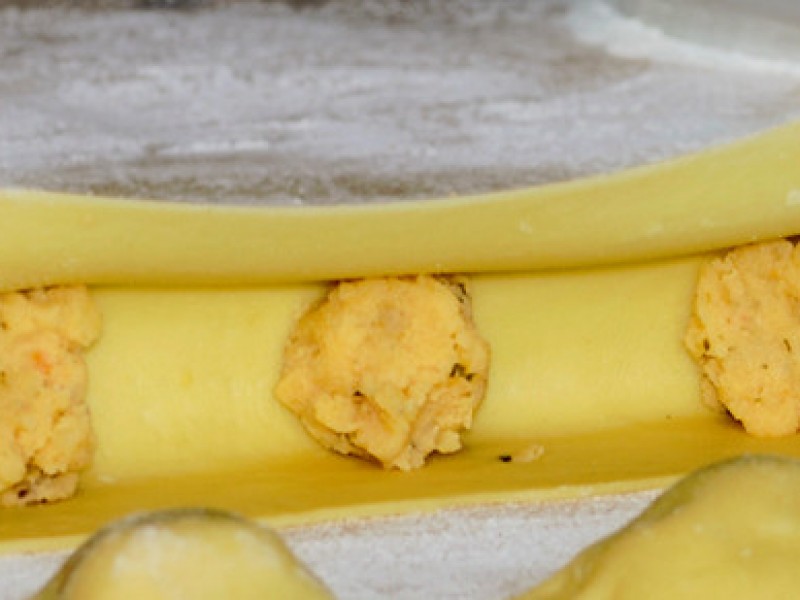
At the end of Spring there are numerous gastronomic fairs all over the valley which have the most classic of all home-cooking as their main dish - Il tortello di patate (small pockets of pasta stuffed with potato).
This dish, which comes from the Mugello, is a real masterpiece of cookery, using humble ingredients to produce a 'noble' result.
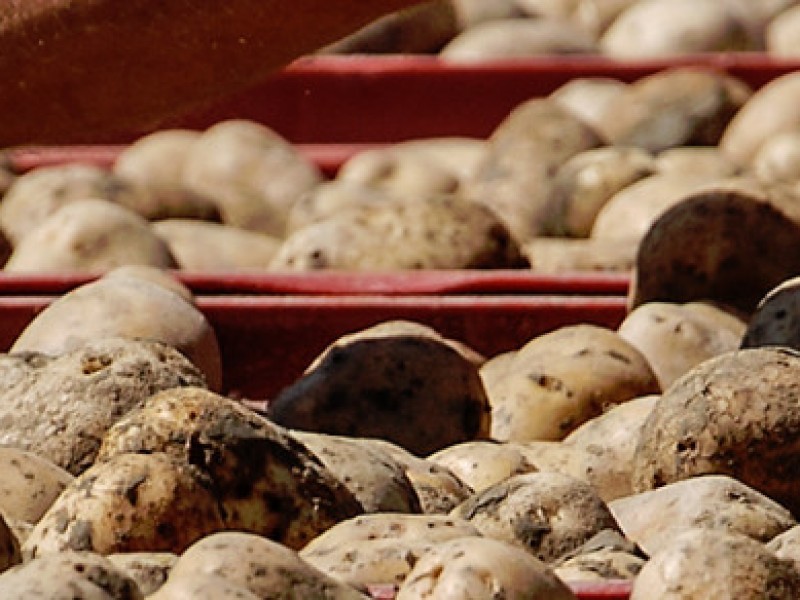
For the Tortello di patate filling we propose the use of the white potatoes cultivated at Firenzuola in the Upper Mugello.
This recipe has been given to us by the women who prepare the tortelli at the very well-known fair which takes place at Luco (Sagra di Luco Mugello).
Duck and goose made their appearance on the table, victims of the corn harvest when the fields were laid bare, at the Summer fairs; nowadays it is still possible to try boiled duck, or other tasty dishes made with chicken, capon and rabbit at some restaurants.
Here is the recipe for a special Mugello - style duck from the Hotel-Restaurant “Soggiorno al Lago” in Vicchio.
The Diotto (September 8th), complete with a parade in historical costume, evokes the arrival of the new Vicario (vicar) at the end of the summer in Scarperia. At this occasion the knife-makers of the town serve the humble dish 'pappa con l'aglio' , made from Tuscan bread boiled in water with garlic and flavoured with pure olive oil, along the streets.
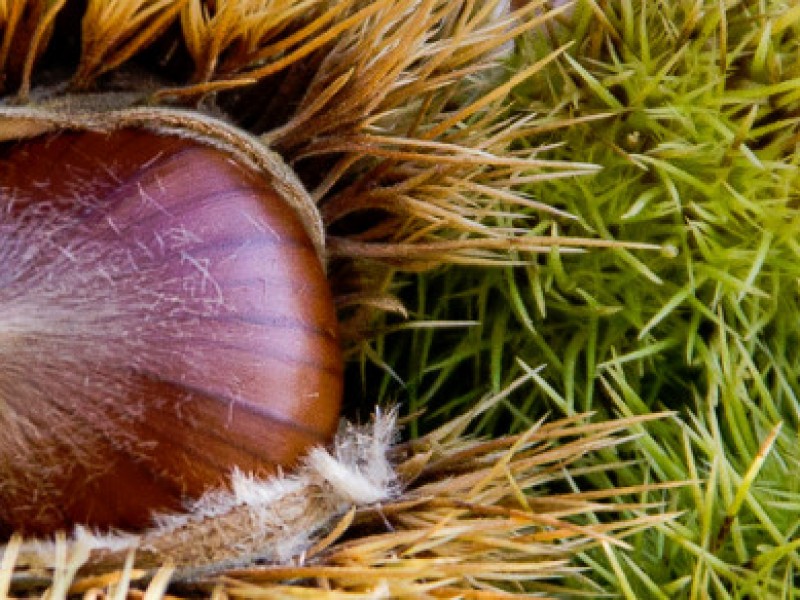
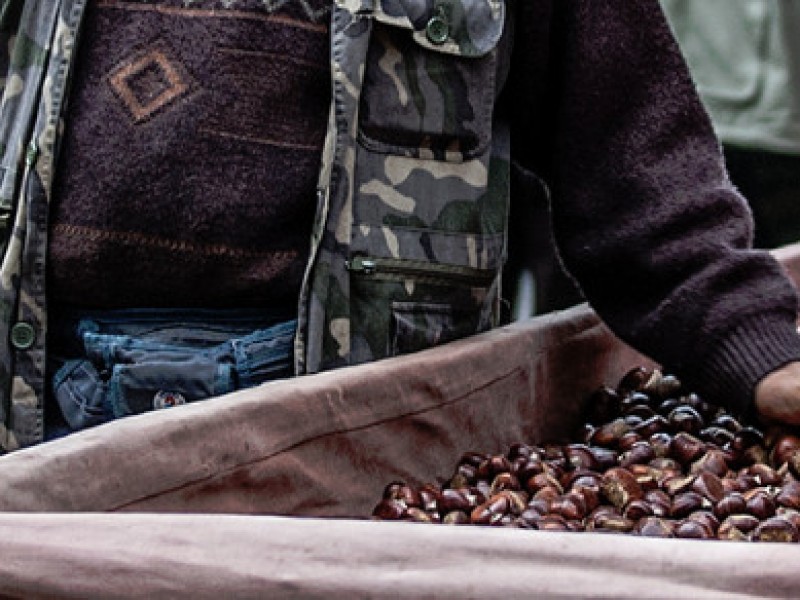
The season of boiled and roast chestnuts, and the fruits of game-hunting in the form of tiny roast birds and stewed hare marks the arrival of autumn. The dishes made with wild-boar and roe deer are extremely tasty and skilfully cooked by the restaurants “Cosimo de Medici” at Cavallina near Barberino di Mugello or by “Casa di Caccia” by farmhouse "Poggio di Sotto" at Galliano , which proposes the delicious roe deer with cream.
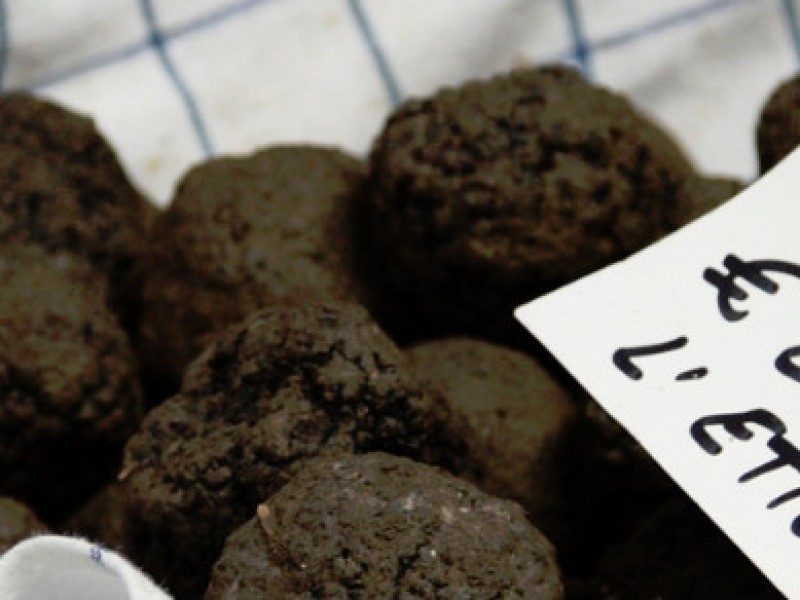
Now is the season for huge feasts where roast ribs of pork are eaten together with dishes flavoured with mushrooms and truffles, perhaps not as well-known as those of other places, but gourmets appreciate their exceptional flavour.
The restaurant “Giro di Bacco” in Cafaggiolo (Barberino di Mugello) serves strings of home-made pasta with flakes of black truffle from Mugello.
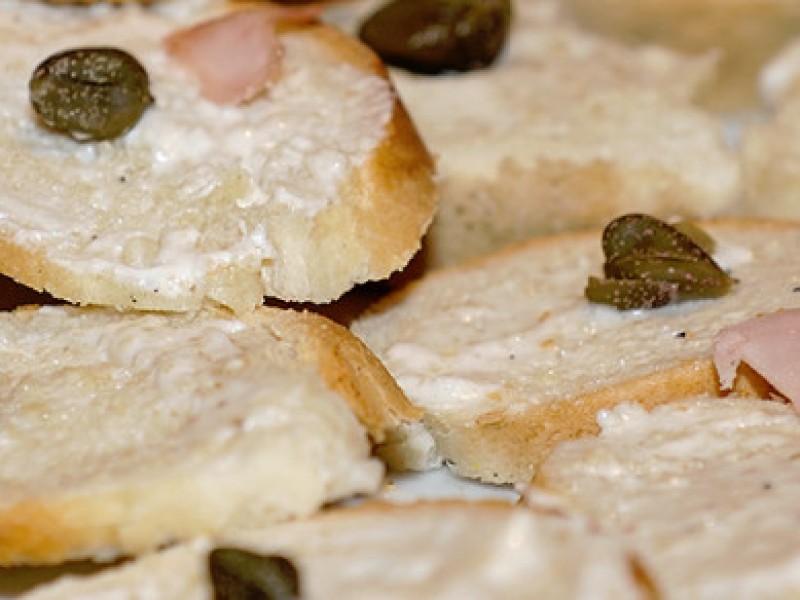
This is also the season of “Crostoni di cavolo nero” (toasted bread served with boiled black cabbage and of recipes using green cabbage which has become more tender after the first frosts.
Cauliflower is used in a particular recipe of the restaurant “Gli Artisti” found in the centre of Borgo San Lorenzo: Cappellotti.


During the cold season hot dishes especially thin soups are eaten. The “ribollita” (a special vegetable soup) is very well known but the recipe of this tasty Zuppa rustica (country soup).
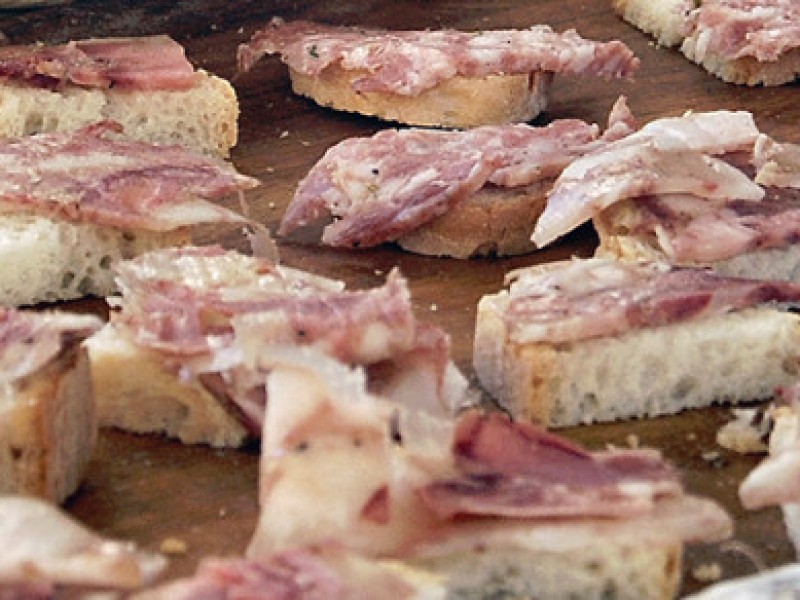
At Christmas, both in the homes and in the restaurants the women and the cooks are busy preparing fancy meals of finely-rolled out dough for the 'cappelletti' (stuffed pasta), pickled onions and mushrooms, toasted bread with chicken liver and milt, capons, roast pork with potatoes, mixed grills on the spit, crunchy almond biscuits served with sweet wine and to finish a glass of 'Gemma d'Abeto' a liqueur made with pine resin by the monks of Monte Senario (in Vaglia, between Mugello and Florence) from a recipe left by Father Martini, who was born in Sant'Agata del Mugello.
The cuisine of the Mugello can be defined as consisting of simple flavours, simple dishes made from humble but genuine ingredients: fresh vegetables, only a few spices of which pepper and nutmeg are the most commonly used, with the occasional addition of chilli, here known as 'zenzero'. Chestnuts, corn meal, game, peaches and pears also play an important part.
Cuisine in the land of the Medici
 La ribollita
The Mugello is a huge valley closed in on the north by the Apennine mountains, on the south by the spur made up by Mount Giovi and Mount Senario which divide it from the valley of Florence, and on the west by Mount Calvana beyond which the city of Prato and its surroundings extend.
The most important towns of the Mugello are Barberino di Mugello, Scarperia e San Piero, Borgo San Lorenzo, Vicchio and Dicomano.
This valley was once extremely rich in game: deer, roe-deer, wild boar, hare, wild duck and geese; the many rivers and streams were well-stocked with barbell, roach, eel, trout and prawns. The Ligurian Magelli, the Etruscans and the Romans had settlements here, and later after the Dark Ages, the medieval families of the Guidi and the Ubaldini made their homes here.
After 1300 the Mugello passed a period of rapid development as a rural area of the Florentine Republic. A certain Morelli (1371-1444), native of this land, wrote this description of the beauties and the produce of the Mugello in his Chronicle of the Fourteenth Century (Cronaca Trecentesca):
On the plains of the Mugello are to be seen the best and most fruitful of orchards of the County, where the harvest is made twice or thrice a year, and always in abundance. And I learned that on the rich lands of these hillsides there is wheat, fodder, fruit, wine and oil in abundance, and also great quantities of wood and chestnuts and livestock enough to supply a third of Florence.
I learned that great quantities of cheese and lambswool and chickens come from the Mugello and that there are other fowl and game in great abundance.
The Medici family, and, in particular Lorenzo the Magnificent, have left many signs of their dominance in the Mugello, not only with their buildings (notably the VILLA OF CAFAGGIOLO at Barberino, the CASTLE OF THE TREBBIO at San Piero a Sieve, the PALACE OF THE VICARI at Scarperia) but their presence also remains visible in agriculture - the fields and the woods planted with their taste for geometric patterns, and the system of irrigation.
In the fifteenth century the Medici family, on their property situated at PANNA, established a cattle farm, breeding 'Swiss' cows (Alpine browns) to provide both for themselves and also to sell.
Today, after many centuries, the Mugello still maintains this tradition and many farms of this territory breed cattle, sheep and also horses:
-
much of the cow's milk produced here is distributed by the central dairy of Florence for the city's population. The uncontaminated nature of the environment where the milk is produced has allowed it to be given the denomination of Top Quality, and specifically MUKKI MUGELLO. The delicious yoghurt produced with this milk is sold under the name BIO MUKKI, the biological milk Podere Centrale is also produced;
-
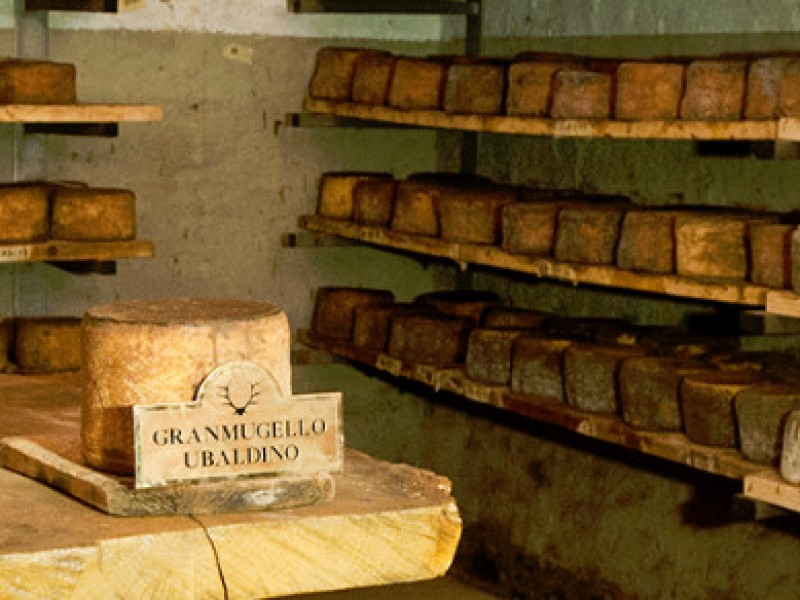
sheep's milk, initially prepared by the shepherds, is then made into an excellent sheep's cheese at the diary;
-
beef is sold by a network of local butcher's. Its quality is guaranteed by the well-established Consorzio Carni Mugello.


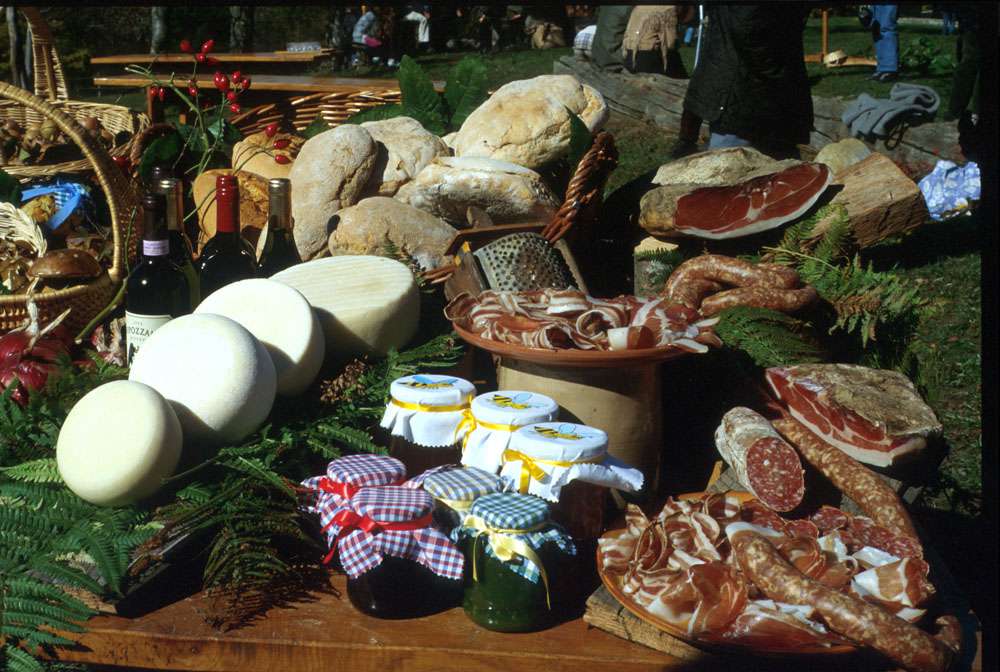


The annual FIERA AGRICOLA MUGELLANA (Agricultural Fair of the Mugello), continues the tradition of the markets of the Mugello and gives us an overall view of the local agricultural activities with several important zootechnical exhibitions (the national, regional and provincial shows of the Limousine beef cattle and the Frisone milk cow) as well as expositions of other products and machinery.
Mugello in a nutshell
Discover Mugello in your next holiday in Tuscany, suggestions for spending 1, 3 or 5 days in Mugello


Mugello guide books
You can download the guide books. Discover Mugello in your next holiday in Tuscany!
